Think about the last time you were driving and had to brake suddenly. Did your car stop smoothly and without a fuss? Or did it feel like a struggle, maybe with some strange noises or vibrations? Your brakes are arguably the most important safety feature on your vehicle, and ignoring the signs of brake trouble can put you, your passengers, and other drivers at serious risk.
The good news is that your car often gives you plenty of warning before your brakes completely fail. By knowing what to look for and listening to your vehicle, you can catch problems early. This not only keeps you safe but can also save you from more expensive repairs down the road. If you’re a driver in Louisville, Kentucky, especially one with a European or Asian import, paying attention to these symptoms of bad brakes is crucial.
Your car shouldn’t make loud or strange noises when you brake. If it does, consider it a clear sign that something is wrong.
This is often the first sign of bad brakes that people notice. A high-pitched squeal or squeak when you press the brake pedal is a common sound. Most modern brake pads have a built-in “wear indicator” — a small metal piece that rubs against the rotor when the pads get too thin. This is a very intentional sound designed to let you know that it’s time to replace brake pads. Think of it as a friendly but urgent warning.
If you hear this sound, don’t put off getting your car checked. While your brakes may still be working, their effectiveness is greatly reduced. Continuing to drive will only lead to more serious issues.
A grinding noise when braking is a much more serious problem. It means your brake pads are completely worn out, and now the metal backing plate of the brake pad is grinding directly against the metal brake rotor. This is a very damaging and dangerous situation.
The grinding sound is unmistakable—it’s harsh and metallic. When you hear it, stop driving immediately if you can. This kind of friction not only makes it harder to stop your car but also causes significant damage to your brake rotors. What could have been a simple and affordable brake pad replacement now becomes a more complex and expensive job involving new pads and rotors.
Sometimes, you might hear a clicking noise. This could be a sign that a part is loose. It might be a small component, like a bolt or a retaining clip, that isn’t properly secured. While it may not seem as alarming as grinding, any unusual noise from your brakes is a reason to have a brake system inspection performed by a professional. Ignoring a loose part can cause it to break off, leading to a much larger problem.
Your car’s dashboard is a powerful communication tool. The lights that pop up aren’t just there for decoration; they are vital warnings that something needs your attention.
The most obvious is the brake warning light. This light, which often looks like an exclamation point inside a circle, or the word “BRAKE,” can indicate several things. It could mean your parking brake is engaged. But if it comes on while you’re driving, it could be a sign of a serious issue, like low brake fluid or a problem with the hydraulic pressure in your braking system.
Don’t ignore this light. If it stays on after you’ve released your parking brake, it’s a clear signal to find a professional import auto brake mechanic as soon as possible.
Some cars also have a separate ABS (Anti-lock Braking System) warning light. The ABS helps prevent your wheels from locking up during hard braking, allowing you to steer while stopping. If this light comes on, it means there’s an issue with your ABS. While your regular brakes might still work, your car’s ability to handle emergency stops is compromised.
The way your brake pedal feels under your foot is another key indicator of your brake system’s health.
If you press your brake pedal and it feels soft, mushy, or spongy, that’s a major red flag. Instead of feeling firm and responsive, it might sink to the floor with little resistance. This sensation is often caused by air or moisture in the brake lines, or low brake fluid. Air in the lines compresses when you press the pedal, which reduces the pressure on the brake pads, making it much harder to stop.
This is a serious safety concern. If your pedal feels spongy, get your car to a mechanic immediately. A professional mechanic will need to bleed the brake lines to remove the air and ensure your brake system has the correct fluid levels and pressure.
Does your brake pedal slowly sink toward the floor when you hold it down at a stoplight? This could be a sign of a brake fluid leak or an internal problem with the master cylinder. The master cylinder is the heart of your hydraulic brake system, and if it’s not working correctly, your braking power will be severely compromised.
Your car should stop in a straight line, without any drama. If it doesn’t, you likely have a problem with your brakes.
When you apply the brakes, does your car pull to one side? This can happen if one of your brake calipers is stuck, or if there is uneven wear on your brake pads. For example, if the brake on the left side of your car is gripping more effectively than the one on the right, your car will veer to the left. This not only makes it harder to stop but can also be dangerous on a busy road. It’s a definite sign that you need a professional brake repair inspection.
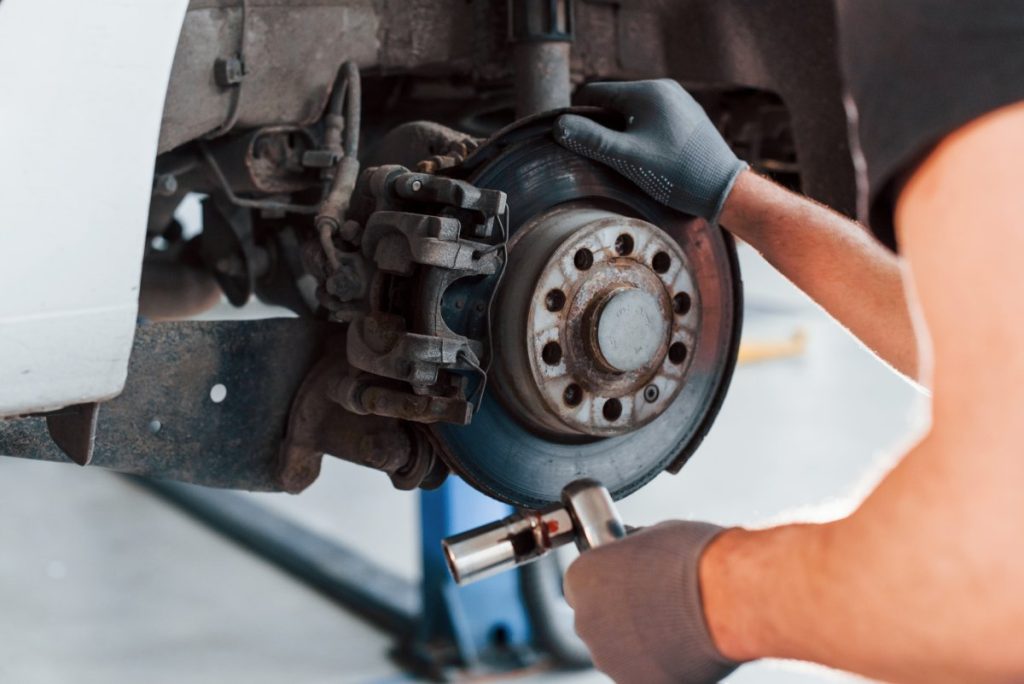
Do you feel a shaking or vibrating sensation when you press the brake pedal? This is a strong indicator of warped brake rotors. The rotors are the large metal discs that the brake pads clamp down on to stop the wheels. Over time, and especially with a lot of heavy braking, these rotors can overheat and warp. When you apply the brakes, the pads hit the uneven surface of the rotor, creating a vibrating or pulsating feeling in the pedal and even the steering wheel.
While warped rotors can still technically stop your car, their effectiveness is reduced, and the constant vibration is a nuisance. It’s also a sign that your brakes are not working as efficiently as they should.
Sometimes, the signs of a brake problem are less about what you see or feel and more about what you smell.
If you’ve just come down a steep hill and you smell something hot and acrid, it’s a good sign that your brakes are overheating. This is called “glazing” and happens when the brake pads get so hot that their surface hardens, making them less effective.
However, if you’re driving normally and you smell a chemical or rubber-like burning odor, it could be a sign of a stuck brake caliper. A stuck caliper means the brake pad is constantly rubbing against the rotor, even when you aren’t braking. This creates a lot of heat and can quickly cause serious damage. If you notice this smell, pull over safely and have your car towed to a repair shop.
Brake fluid is essential for your braking system to work. If you notice a small puddle of clear, yellowish, or brownish fluid on your driveway, it could be a brake fluid leak. This is a very serious issue. A leak means your brake system is losing pressure, and eventually, you will lose the ability to stop your car.
According to recent studies, “brake failure still remains within the top 5 causes of car accidents due to mechanical failures.” Your brakes are your best ally between you and a potential accident. Ignoring the squeaky brakes or a spongy brake pedal isn’t just inconvenient—it’s dangerous. For owners of imported vehicles, finding a repair shop that specializes in their car’s unique needs is crucial. A standard mechanic may not have the specific tools or expertise required for European and Asian vehicle repair.
At Hopson Import Repair in Louisville, Kentucky, we understand the complexities of imported cars. We’re a veteran-owned and operated facility with over 10 years of certified experience, so you can trust that your vehicle is in expert hands. We specialize in import auto repair services and offer a comprehensive brake pad replacement service along with full brake system inspections. Our team of highly skilled import technicians is dedicated to providing quality service at a fair price, and we even offer a warranty and zero percent financing options to make sure you can get the repairs you need without stress.
Your car will almost always give you a heads-up before a major brake failure. By paying attention to the sounds, smells, and feel of your vehicle, you can catch problems early and prevent a dangerous situation. Whether it’s the classic squeaky brakes or a more alarming car pulling when braking, these are not issues to ignore.
Don’t gamble with your safety. If you’ve noticed any of these brake repair signs, it’s time to take action. For drivers in Louisville, KY, your car deserves the best. Come to Hopson Import Repair for a complete brake system inspection and professional service. Let our expert import mechanics make sure your brakes are in perfect working condition so you can drive with confidence. Contact us at (502) 260-9590.
Common brake repair signs include squealing or grinding noises, a spongy brake pedal, vibrations when braking, a car pulling to one side, dashboard warning lights, or a burning smell.
Squeaky brakes usually mean your brake pads are worn. While you may still be able to drive short distances, delaying service can lead to rotor damage and more expensive brake repairs.
A spongy brake pedal often indicates air in the brake lines or low brake fluid. This reduces braking power and should be inspected immediately by a professional mechanic.
Shaking or vibration when braking is commonly caused by warped brake rotors. This affects stopping performance and requires professional inspection and possible rotor replacement.
If your brake warning light stays on, it could signal low brake fluid, worn brake pads, or a hydraulic system issue. Immediate inspection is recommended to prevent brake failure.
Brake pads typically last between 30,000–70,000 miles depending on driving habits, vehicle type, and road conditions. Regular brake inspections help prevent unexpected failure.